 The Care Compass®
Telling Someone With Dementia They’re Moving to a Care Home
In short (last checked 22 November 2026)
- There's no perfect script. What matters most is a calm, kind, simple explanation, repeated as often as needed.
- If they can't decide for themselves, the move is made in their best interests, usually with a health and welfare attorney or deputy.
- Tears, anger or “I can look after myself” are normal reactions, not a sign you've made the wrong decision.
You've made one of the hardest decisions a family can make. Now there's a second worry on top of it: how do you tell them? And what do you say when they look at you and remind you that you promised never to put them in a care home?
From Steve
With Mum, we raised it early, as a possibility. If Dad didn't improve, and we were going to hold down our jobs, a care home might be the only safe option. She kind of understood. But she was reluctant at every step, and her answer was always the same: “I can look after myself.”
When the day came, she sobbed on the bed. I've written about that morning, and the months after it, in helping your loved one settle into a care home.
Who makes the decision
If your loved one has the mental capacity to decide where they live, it's their decision, even if you disagree with it. You can support them to decide, but you can't decide for them.
If they don't have capacity for this decision, it must be made in their best interests. That means taking their past and present wishes into account, involving them as far as possible, and choosing the option that restricts their freedom least. Usually the decision is made by:
- a health and welfare attorney under a lasting power of attorney, or a deputy appointed by the court, if there is one
- otherwise, family and the professionals involved, together
In Scotland, the equivalent is a welfare power of attorney or a welfare guardian. In Northern Ireland, an enduring power of attorney covers money and property only, so welfare decisions are made with family and professionals, in the person's best interests.
Should you tell them in advance?
Usually yes, but how far in advance depends on where they are with dementia.
- Earlier stages: involve them as much as you can. Visit homes together, talk about what matters to them, and let them have a say in the room and what goes in it.
- Later stages: a warning weeks ahead can mean weeks of worry they relive each time they remember. Many families explain simply and closer to the day, and repeat it gently when asked.
Some families start with day visits or a respite stay, so the home is already a little familiar. It's worth asking the home whether they offer this.
Be careful with stories that aren't true, such as “it's just for a few days”. They can make the first weeks harder if your loved one feels misled. Gentle, simple words that are true work better: “This is where you'll be looked after now.”
What to say
Pick a time of day when they're usually at their best, somewhere quiet. Keep it short, and talk about feelings and safety rather than what they can no longer do. Things families have found helpful:
- “We want you to be safe, and to have people around to help, day and night.”
- “I can't give you all the help you need on my own any more, and I want you to have it.”
- “I'll be visiting. I'm not going anywhere.”
Use the same words each time they ask. Repeating a calm, familiar answer is kinder than a new explanation every time.
What tends not to help
- Arguing about whether they can cope. “You can't manage, Mum” is heard as an attack. Acknowledge the feeling instead.
- Long explanations. Too much detail can be harder to follow and easier to argue with.
- Promises you can't keep, such as “you'll be home soon”.
- Getting drawn into a debate. If it's getting heated, pause, change the subject, and come back to it later.
Get family and friends saying the same thing
This is easy to overlook, and it matters. If one relative or friend says something different, such as “you don't have to go if you don't want to”, it can undo everything you've said and make the move much harder for everyone, your loved one most of all.
- Agree the words beforehand, so everyone gives the same short, calm answer when asked.
- Decide who leads the main conversation, usually one or two people they trust most.
- Keep disagreements away from your loved one. If someone isn't on board, talk it through privately, before the day.
- Brief regular visitors, including friends and neighbours, and later the care home staff, so the message stays consistent.
Families who are on the same page can support each other, and your loved one hears one steady message instead of several.
“I can look after myself”
This is one of the most common things families hear. It's often said out of fear: of losing independence, of being forgotten, of not coming home. You don't need to win the argument. Try “I know you want to be at home”, and come back to the reason that's true for both of you: being safe and having help close by. If refusal is part of what led here, our guide to when someone won't accept help may help.
“You promised you'd never put me in a care home”
Many families made that promise, often years ago, before dementia was part of the picture. It was a promise about a future nobody could see.
The promise underneath it was really this: I'll make sure you're safe and looked after. That's the one you're keeping, even if it doesn't feel like it today. If the guilt is heavy, our guide to carer's guilt and anticipatory grief is for you.
On the day
- Set up their room before they arrive: familiar photos, a favourite chair or blanket, things they'll recognise.
- Ask the home how they'd like to welcome them. Many have done this hundreds of times and will have ideas.
- Keep the goodbye calm and not too long. Staff can help with a distraction, such as a cup of tea, as you leave.
- Expect tears, anger or silence. It doesn't mean you've chosen wrongly. You may cry on the way home too.
Our guide to settling into a care home covers the weeks that follow, including “I want to go home” and saying goodbye after visits. If you're still choosing, see choosing a care home.
A word from The Care Compass
There isn't a way of telling someone that makes it painless, for them or for you. A calm explanation, said with love and repeated as often as needed, is enough. Settling in takes time, often months rather than weeks, and it usually does get easier.
This guide draws on Alzheimer's Society guidance and Steve's own family's experience. It is general guidance, not legal advice. If there's disagreement about a best-interests decision, the social worker or a solicitor can help.
Common Questions
Should you tell someone with dementia they are moving into a care home?
Usually yes, in a way that fits their stage. In the earlier stages, involve them as much as you can. In later stages, a long warning can mean days of worry they can't hold onto, so many families explain simply and closer to the day. There's no single right answer.
What do you say to someone with dementia on the day they move into a care home?
Keep it short, warm and the same each time: that this is where they'll be looked after, that you'll visit, and that you love them. Talk about feeling safe and cared for, not about what they can no longer do.
What if I promised I'd never put them in a care home?
That promise was made about a future nobody could see. The promise underneath it, that they'd be safe and well cared for, is the one you're keeping. Many families carry this guilt, and it usually eases with time.
Who decides if someone with dementia moves into a care home?
If they have the mental capacity to decide, they do. If they don't, the decision is made in their best interests, usually by a health and welfare attorney or deputy if there is one, together with family and professionals.
What if they say they can look after themselves?
Don't argue the facts. Acknowledge the feeling, for example "I know you want to be at home", and come back to why: being safe and having help close by. A respite stay first can make the move feel less sudden.
Didn’t find what you needed?
This page can’t cover every situation. If something’s still unclear, send us a quick message and we’ll do our best to help or point you in the right direction. For support right now, Admiral Nurses (via Dementia UK) offer free specialist advice by phone, and Carers UK has a helpline for practical and emotional support.
You don’t have to navigate it alone.
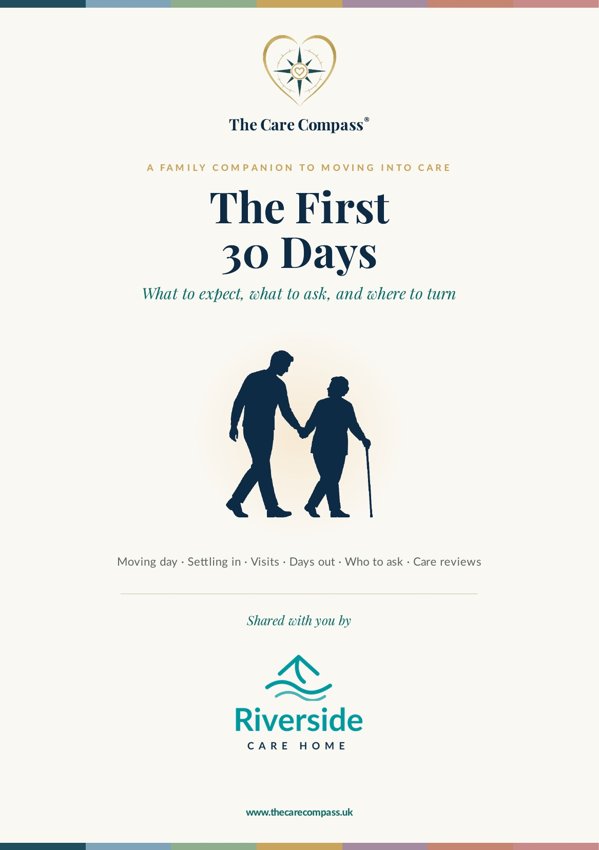
Could The First 30 Days help families at your relative’s care home?
It’s a short welcome booklet for the first weeks after moving in, printed with the home’s own name and details. Care homes order it for their families.
Tell the care home about it →Opens a short, ready-written email you can send to the manager. You choose whether to send it.
Did this help you understand what to do next?
Sorry it didn’t quite help. What was missing?
Thank you — that’s really useful to know.
Help another family find us
A short Google review helps families searching late at night find calm, free guidance when they need it.
Leave a Google review →Didn’t find what you needed?
This page can’t cover every situation. If something’s still unclear, send us a quick message and we’ll do our best to help or point you in the right direction. For support right now, Admiral Nurses (via Dementia UK) offer free specialist advice by phone, and Marie Curie has a free support line for anyone affected by a terminal illness.